Monday, April 26, 2010

Jamming jamming...


After reading a classmate's post about Jamaica, I do not know how to react to my own interest with Jamaica. I have never lived there, yet some of my best friends are from Jamaica. They taught me how to be 'chillin' and laid back, something I do not know how to do back in the competitive Chinese society. I was usually nervous and miserable even though I have worked hard for certain academic work, activities, exams etc. Some identify this trait of 'laid back'ness to the South American culture too.Through my friends' influence, I have adopted laid back-ness as part of my being, where instead of achieve success through stress, why not wait for success to come peacefully when you have put in enough effort?

This mentality is strikingly similar to how World Music Percussion Ensemble (WMPE) is run. Started exactly 25 years ago, the WMPE is always led by the music director and spiritual leader, Hafiz Shabazz. Everybody calls him Hafiz. A percussionist since he was 7, you could tell he knows everything about drumming. I recently found out that he is Jamaican, but I wonder that has anything to do with his cheerful and laid back personality.

Everybody is welcomed to join the percussion group, and Hafiz make sure everyone in the rehearsal room grade their feeling at that moment from 1-10. It is his ritual, and a way to find out how everybody is doing. I was drawn into the group since freshmen fall because of my interest to African drumming. Comparing to most student-run organizations on campus, our group dynamics is a little different, where it used to be sustained solely by the students tie to their love and respect for Hafiz. students will come and go from practices without really talk to each other but Hafiz. Of course, the sound of the drums can be too noisy to start a conversation during rehearsals.

Before organizing bonding activities outside rehearsals, our group was more about competition than friendship. Perhaps our competitiveness rooted from how Hafiz lead the group. During rehearsals, we would sit in a half circle surrounding Hafiz in the middle. He does the teaching, calling, and selection of who does what in our group. I would like to think that I am better when I was chosen to play certain rhythm. Turns out Hafiz usually delegate the rhythm according to the hierarchic order of age and experience in the group. He does it so subtle, then when I found out, I gave up trying to improve myself. I was a freshmen, therefore I had a long way to go before I can have my own solo part.

Every term, we would have a themed concert at the Hop. We usually recycled the rhythms we have learned and use them according to the music theme. We drum to cuban music, irish music, and sometimes jazz. The members are fully aware of how concert is run: after we master the rhythms, we become the backdrop, and Hafiz will get external guitarist, saxophonist, percussionist into our practice. Why do I associate this to "laid back"ness? Come to think of it, no matter how bad we do, there will always be somebody else playing the same rhythm. You are always covered. You can be on stage with little practice or maximum practice. That's why we never have full attendance during rehearsals.

Before you think I will continue my criticism, I will share some positive side of WMPE. Perhaps its main aim of accepting everyone from different music levels and background is to show that there should not be a preset condition to play music. The group has experienced membership from the most diverse background not only limited to students. Even though the flip side of the coin is we can never do challenging rhythms as a group, Hafiz welcomes individual contribution to the group. Anyone with a creative musical piece can have his or her own solo moment on stage. Last winter, I was featured in the concert because I brought in a Chinese music piece from home. Some terms when we lack experienced musicians among the members, Hafiz will call his musician friends to guest featured in the concert.

Therefore, our concert is always a huge success. The exotic drumming twinned with various music genre produce a new kind of hybrid, regardless of how easy it is for the members to achieve it. Our members continue to come and go as they please, but I guess WMPE take Hafiz for granted, because he will always be there, guiding the group with unlimited inspiration and network of musician friends. I intend to take as much as I can from WMPE: the diverse group of friends, inspiring leader and musicians, the community beyond the conventional Dartmouth setting and occasionally, shutting down my mind and chill.

Monday, April 12, 2010

Who are we serving?


The International Student Association (ISA) is a representative group for international students, but is open to Americans with an interest in international culture.- The Dartmouth, 9/1/2005

Having been in Dartmouth for almost two years, I am constantly pestered to join different organizations on campus, most of them claim to provide a comfortable place for a group of student to be them'selves', a home away from home. Indeed, involving in student organizations is a good way to meet people and form tight-knit communities.

Seeking a comfort zone in Dartmouth is not just a task for international students; most Americans find themselves in similar situations where they have to navigate their social groups based on their interest, skin color, or where they come from in USA.Therefore, all of us, in my opinion, is searching for an organization that resonates with our 'identities' and personalities.

However, unlike many cultural organizations, ISA seems to fail in capturing its members' interest to stay in this "home away from home". Over the two years, not only have I experienced major changes within the organization in terms of leadership, I also felt the absence and the need to find out how do the international students form a community here on campus. Instability of ISA may be caused by the rapid shift of leadership thus the regular elections,but is ISA doing too much here?

ISA wants to be a community for international students, advocate for international students with the administration, at the same time educate the Americans about international culture. Its objective allows extremely easy membership for anyone who is interested to join the organization. Easy access to membership also means easy "ownership". Doors open, anyone can come into your 'home' (sometimes become the head of the household). Relate to the previous post, if I find it hard to own hip-hop, I probably do not associate with the "image" of hip-hop entirely. However if everybody could easily own ISA, does it mean that ISA's image is easy to relate? Then how do we explain the disloyalty of membership? Is ISA facing a problem of dual(or none) images (identities)?

Many organizations require one to prove their eligibility to join them. With easy membership, we often hear whispering about " how international are you?". Many international students felt uncomfortable to join the organization simply because they are not understood, felt it does not resonate with their expectation. It is already established that international students are the minorities on campus , not because of their exotic culture ( which many colored American students share), but the unique experience in terms of adapting in a foreign land with foreign language and dietary. Some already came with stable career goals and most of us are probably financially independent from our parents. Not many spend time figuring themselves out through a typical college party scene.Thus, We all need some sort of support network that we could talk about all these difficult transitions. Assuming ISA realizes all of that, why is it so difficult for ISA to focus prioritize such platform without bearing the burden to 'promote' our culture to the larger community? Why is it so hard exclusively serve the international students and just deal with our own problems? Is it because international students have received a large portion of financial aid, therefore bearing more responsibilities in shaping the campus' diversity?

Without question, money is always a cause for how things work. For years, ISA 'struggles' to abide by rules set by COSO, a student organization that funds the running of ISA and hundred other student organizations on campus. COSO has categorized ISA as a cultural organization, limiting its power as a liaison between international students and administration, nor offers a safe and comfortable platform for international students dealing non-cultural transition issues even though they are stated in ISA's mission statement.

Nonetheless, ISA is still the formal representative of international students in Dartmouth regardless of its underrepresented members. Three years ago, ISA negotiated the need-blind admission for international students; every year, ISA members aid the popular international orientation program; and just last week, ISA met with President Kim to talk about issues pertaining international students' life on campus. More are expected from ISA to perform well as a united international voice, but before that, ISA needs to better manage its image to its audience in order to have that true voice reflected by its roughly 600 members. Right now, I can claim, ISA holds only 'big' voice decided by 9-10 people and a confusing image; At the mean time, the scattered international students find their own ways to form smaller pockets of community-- the classrooms, interesting international programs offered by Tuckers, Dickey Foundation and Rocky, the international newspaper, or in the limited rooms available in the international residential clusters--while keeping their commonly shared concerns remain unknown to ISA.

Monday, April 5, 2010

What are we dancing for?

Founded in 1970, xxxx is a student-run/student-coordinated dance troupe that focuses on expression through movement. The term xxxx is one of the seven Kwanzaa principles meaning collective work and responsibility and the group operates with these tenets in mind. An organization of the Afro-American society, its repertoire includes modern dance, jazz, African dance, hip-hop and ballet; however, xxxx now primarily focuses on hip-hop dance.


Since freshman year, I have been 'hunting' for dance group on campus that I could feel comfortable to be part of. With my diverse dancing experience in Ballet, Hip Hop, Chinese and African dancing, I thought xxxx would be a perfect choice for me. The organization statement stresses "expression through movement", which could easily related to the American civil rights movement from the 60s, as back in those days, any movement could be about human rights, equality of different race. Fast forward to 40 years later, the dance troupe still stand, but not quite the same anymore.

Our generation is a generation that enjoys the "success" of the civil rights movement.Relatively more freedom and equality are granted to us since birth,and we no longer have much to worry about. Dancing become something about us as separate individuals, our (body's) ability to grab attention, grab audience... to be known, not so sure about that?

Referring back to the last sentence of xxxx's mission statement:"xxxx now primarily focuses on hip-hop dance." It seems like xxxx does not want to give up and still attaches themselves to its important history, but currently, they seem to be taking a break from it. People who focus on the first part of the statement like me, and went for an audition with the expectation to express my diversity, predictably got rejected. Says one of the member, " we felt that you don't have the attitude we wanted".

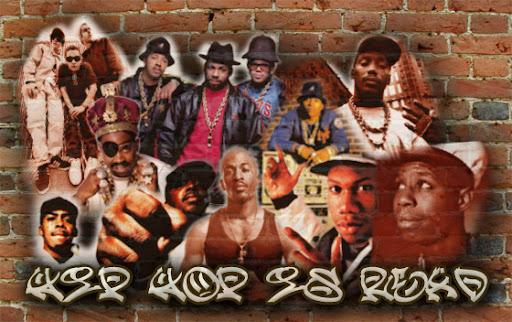
What kind of attitude are they looking for? Blackness? Hip-Hop-ness? Seductiveness? I dared not ask them, fearing that I was stepping into a sensitive zone. But clearly xxxx's image has evolved over time according to current generation's need.I remember my first exposure to Hip-Hop 5 years ago,the rhythm I danced to was half as fast without any emphasis on sex appeal, gangsterism, drug and violence. All you need is sleeveless tank tops and sweat pants. Apparently,the word Hip-Hop didn't change except its context. My hip-hop experience was very much "old school", nothing compare to the hip-hop today as a global commodity thanks to Beyonce, Jay Z, beat-boxing, DJs and street-dancing.

I can't help but to notice that hip-hop dance started with a sense of purpose to fight social injustice, just like how the Great Generation lived with a purpose to serve for the nation. Slowly, hip-hop has passed down to us, the creative millennials who happen to associate it more to "bling-blings", leather jacket, golden necklace and Ferrari.

Sitting in a meeting, discussing about xxxx's plan for the term, I noticed that only 3 out of 20 something members are non-black, and we were "coincidentally" feeling out of place when the members were picking songs. None of us were confident enough to 'think' we should perform certain songs, nor try to grab any opportunity to choreograph dance moves for the groups. Face it, even if we dance it, we don't own hip hop, not that all other members can recite the whole history of hip-hop to you, its just how it is.

Oh, forgot to mention, I auditioned for the second time, this time I focused more on the "attitude" and I got in. After all, even my objective of dancing might not be in synced with xxxx's aim to cater to generation Y, I enjoy it being my outlet to be on stage, performing, expressing my 'self'.How much of my 'self' can be shown on stage through hip-hop might be a challenge though.