Founded in 1970, xxxx is a student-run/student-coordinated dance troupe that focuses on expression through movement. The term xxxx is one of the seven Kwanzaa principles meaning collective work and responsibility and the group operates with these tenets in mind. An organization of the Afro-American society, its repertoire includes modern dance, jazz, African dance, hip-hop and ballet; however, xxxx now primarily focuses on hip-hop dance.
Since freshman year, I have been 'hunting' for dance group on campus that I could feel comfortable to be part of. With my diverse dancing experience in Ballet, Hip Hop, Chinese and African dancing, I thought xxxx would be a perfect choice for me. The organization statement stresses "expression through movement", which could easily related to the American civil rights movement from the 60s, as back in those days, any movement could be about human rights, equality of different race. Fast forward to 40 years later, the dance troupe still stand, but not quite the same anymore.
Our generation is a generation that enjoys the "success" of the civil rights movement.Relatively more freedom and equality are granted to us since birth,and we no longer have much to worry about. Dancing become something about us as separate individuals, our (body's) ability to grab attention, grab audience... to be known, not so sure about that?
Referring back to the last sentence of xxxx's mission statement:"xxxx now primarily focuses on hip-hop dance." It seems like xxxx does not want to give up and still attaches themselves to its important history, but currently, they seem to be taking a break from it. People who focus on the first part of the statement like me, and went for an audition with the expectation to express my diversity, predictably got rejected. Says one of the member, " we felt that you don't have the attitude we wanted".
What kind of attitude are they looking for? Blackness? Hip-Hop-ness? Seductiveness? I dared not ask them, fearing that I was stepping into a sensitive zone. But clearly xxxx's image has evolved over time according to current generation's need.I remember my first exposure to Hip-Hop 5 years ago,the rhythm I danced to was half as fast without any emphasis on sex appeal, gangsterism, drug and violence. All you need is sleeveless tank tops and sweat pants. Apparently,the word Hip-Hop didn't change except its context. My hip-hop experience was very much "old school", nothing compare to the hip-hop today as a global commodity thanks to Beyonce, Jay Z, beat-boxing, DJs and street-dancing.
I can't help but to notice that hip-hop dance started with a sense of purpose to fight social injustice, just like how the Great Generation lived with a purpose to serve for the nation. Slowly, hip-hop has passed down to us, the creative millennials who happen to associate it more to "bling-blings", leather jacket, golden necklace and Ferrari.
Sitting in a meeting, discussing about xxxx's plan for the term, I noticed that only 3 out of 20 something members are non-black, and we were "coincidentally" feeling out of place when the members were picking songs. None of us were confident enough to 'think' we should perform certain songs, nor try to grab any opportunity to choreograph dance moves for the groups. Face it, even if we dance it, we don't own hip hop, not that all other members can recite the whole history of hip-hop to you, its just how it is.
Oh, forgot to mention, I auditioned for the second time, this time I focused more on the "attitude" and I got in. After all, even my objective of dancing might not be in synced with xxxx's aim to cater to generation Y, I enjoy it being my outlet to be on stage, performing, expressing my 'self'.How much of my 'self' can be shown on stage through hip-hop might be a challenge though.
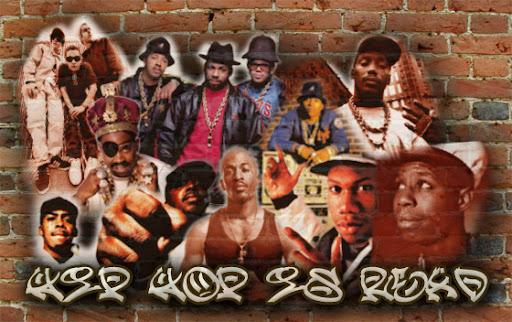


The question of "who owns hip-hop" (or any cultural medium) is an interesting one. Similar questions arose regarding rap when Eminem hit the scene. If a certain medium or style evolves as a way of representing a certain culture, then what happens to the medium when it is practiced or appropriated by people outside of that culture? As these media and styles cross culture, are we creating something new, a more diverse "master" culture? Or is it that the original culture loses something? I don't have an answer; I'm just thinking out loud.
ReplyDeleteHey!
ReplyDeleteAfter reading Gocsik's comment I was immediately reminded of a report I read earlier this year (http://www.huffingtonpost.com/huff-wires/20100226/us-step-show-scandal/) about an all white group from Arkansas that won a (Black) stepping competition. Many people were outraged at the apparent injustice, which seemed to limit objective consideration of what I believe to be a masterful performance from the winning team. The sponsors eventually chose co-winners saying that there had been some discrepancy in the scoring, this giving a Black group a title they ostensibly deserve.
Who/ what is the group dancing for? Probably not the civil rights movement. Probably not because this is the only means of expression that they have on the campus. Perhaps it's just a matter of who is friends with who... and we know how segregated social interactions are at Dartmouth. You might not find what you are looking for, not because they are dancing for reasons different from your own- but perhaps because at the end of the day they are a group of people with interests and friends circles different from your own. If expressing yourself through dance is what you really want to do, I can't imagine why you wouldn't be able to do so through the group.
I'm really happy you decided to try out again, and I wish you all the best.